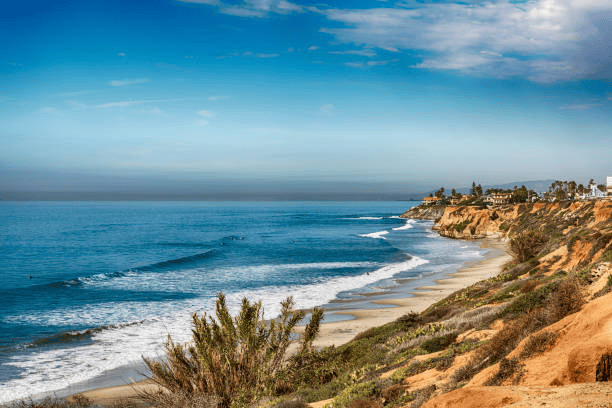
The beach stairs in the 400 block of Coast Boulevard date to the 1920s, when Ellen Browning Scripps paid to build them. Bob Evans, the project volunteer and a former La Jolla Parks & Beaches president, told the San Diego Union-Tribune he did not think they had been maintained or repaired in the last 100 years. Crews started work on Oct. 14 and were scheduled to finish Wednesday, Oct. 28. They cleared the sand, put down a smoothing slurry, and bonded precast concrete pavers made off site onto the old steps.
The city did not pay for that repair. Volunteers raised the money, and a nonprofit that did not exist two years ago carried out the work. That arrangement now covers the most-walked mile and a half of La Jolla's coastline. It also explains why some repairs along the water moved quickly this fall and others will stay closed for years.
A Nonprofit Holding a City Permit
The La Jolla Coastal Conservancy formed in 2025. Its purpose was to take a working relationship between Friends of Coast Walk Trail and the city and apply it to more public spaces. A city permit sets the scope of its work across five zones covering about 1.5 miles. They include Coast Walk Trail, Scripps Park, South Casa, Wipeout, Cuvier Park and Whale View Point.
The roles are split. The city still handles baseline upkeep such as mowing and trash pickup. The Conservancy picks the projects, gets city approval, raises the money and hires the work, and the city coordinates, inspects and oversees anything structural. The Union-Tribune described this as a way for private groups to repair city land under one standing permit, so each project doesn't start from scratch.
The amount of work involved is large. The Conservancy puts its shoreline parks' needs at more than $500,000 a year in maintenance and $30 million in capital projects over a decade. Its invite-only "Cocktails at the Cove" fundraiser on Oct. 1 raised about $70,000, according to chair Brenda Fake. At that pace, the Conservancy can only take on projects one at a time, each sized to fit a specific donor.
Who Is Funding the Shoreline Work
A list of the Conservancy's recent and upcoming projects is also a list of local names. Some are finished, some are scheduled, and nearly every item has a sponsor attached.
| Project | Location | Who paid or did the work | Status |
|---|---|---|---|
| Stair repair with precast pavers | Whale View Point, 400 block of Coast Blvd. | Community fundraising; done through the Conservancy | Scheduled Oct. 14–28 |
| Berms, runoff areas, rock-filled gabions | Coast Walk Trail | Conservancy, with local donations | Done; more to come as funds allow |
| Post-and-chain barriers | North of Whale View Point along Coast Blvd. | San Diego County Neighborhood Reinvestment Program grant; built by SoCal Outdoor Services | Done |
| White wooden fence restoration | Goldfish Point to La Jolla Cove | Initial funding from OluKai La Jolla; $8,000 from the Kiwanis Club of La Jolla; prototype built by Scouts | Target: end of year |
| Belvedere and surf shack painting | Whale View Point | $20,000 from BirdStock proceeds | Planned this fall |
| Lifeguard tower shutters | La Jolla Cove | La Jolla Sunrise Rotary, La Jolla Cove Swim Club, San Diego Fire-Rescue Foundation | Planned this fall |
| Two dog-waste stations | Cave Street and Park Row/Prospect Place trailheads | Enhance La Jolla and the Conservancy | Installed Aug. 26 |
The fence along Coast Boulevard shows the model at its smallest. Eagle Scout candidate Ansel Kincaid and fellow Scouts Wyatt Belt, Luke Siddons and Tyler Mebust built the first prototype section under Conservancy guidance. They replaced failing wood and added marine-grade stainless-steel bird protection wire. In its Oct. 1 update on lajolla.ca, the Conservancy said it still needed about $13,000 to finish the fence. The Kiwanis pledge came in at the fundraiser that same evening.
The Whale View Point stairs show what the model can do once the money is in hand. Melinda Merryweather of La Jolla Parks & Beaches told her board that the effort had been "coming up on two years," and that "to get all the permissions, the right contractor and the money, it was quite an accomplishment," as the Union-Tribune reported. Most of those two years went to approvals and fundraising. The construction itself was scheduled to take two weeks.
The Staircase Too Expensive for One Donor
A short walk north, the beach stairs at South Casa near the Children's Pool lifeguard tower have been chained off since storms damaged their base in early 2024. The project already has a city-approved design. Under the same permit arrangement, the Conservancy carries all of the cost, the engineering, the construction contracting and the permit applications. The city provides procedural support and inspections.
Funding is what's holding it up. At the Oct. 5 La Jolla Parks & Beaches meeting, Fake said one anonymous donor had pledged up to $100,000. She also said the group was working from "an estimate of $5 million based on other people's projects," according to the Union-Tribune. That pledge covers about 2% of the estimate. The Oct. 1 fundraiser, which helped fund the fence and the painting, raised about 1.4% of it.
The schedule matches. A June plan reported by lajolla.ca set design and permitting from 2026 through 2029, about a year of construction starting in 2029, and reopening in late 2030. The Coastal Commission requires the city to make sure the stairs reopen within five years of approval.
A project priced in the tens of thousands can be matched to a festival's proceeds or a service club's check. A project priced in the millions needs grants, and the Conservancy is now pursuing them.
Why the Timing Matters This Winter
Much of the Coast Walk work was done with this winter's forecast in mind. NOAA's Climate Prediction Center kept an El Niño Advisory in place in its Oct. 8, 2026 discussion. It said a strong-to-very-strong El Niño is likely through January–March 2027, with a greater than 83% chance. The next discussion is scheduled for Nov. 12.
Scripps Institution of Oceanography describes the coastal effects of strong events as rain-driven landslides and waves that speed up beach, sea-cliff and bluff erosion. It notes that a strong event can raise California sea level by 6 to 12 inches. In an Oct. 15 report on lajolla.ca, Scripps coastal geomorphologist Adam Young said local sea levels were already about a foot above normal and named winter king tides as a compounding factor.
That explains the gabions. The Conservancy put the small rock-filled baskets at points along Coast Walk Trail to slow stormwater and spread it out before it reaches the most vulnerable parts of the trail and bluffs. Straw wattles and sandbags are planned "as funding becomes available." How much more storm protection Coast Walk gets before the rains depends on how much the Conservancy raises in the next few weeks.
The Shoreline Map Through March
Several other closures are coming at the same time, and that puts more weight on this stretch.
- Torrey Pines State Natural Reserve. The park road, upper parking lots and all trails have been closed to cars and pedestrians since Sept. 22. Utility, comfort station and accessibility work runs through February 2027. The South Beach and North Beach lots and Torrey Pines State Beach stay open, and California State Parks expects full access by March 1, 2027.
- Children's Pool. The beach closes to the public every year during harbor seal pupping season, Dec. 15 through May 15, according to the City of San Diego.
- Torrey Pines Road guardrail. On the stretch from Prospect Place to Coast Walk, nighttime lane closures run Sunday through Thursday from 7 p.m. to 3 a.m. through March 2027. The work covers about 420 feet of rail, plus sidewalk and curb replacement and repaving.
- South Casa stairs. These remain closed, as described above.
With the reserve's trails closed until spring and the Children's Pool closing in mid-December, Coast Walk Trail and the Coast Boulevard bluffs are the main stretch of La Jolla's shoreline still open on foot this winter. Their condition now depends largely on the donors listed in the table.
Residents can support the work directly. The Conservancy is a 501(c)(3) that accepts tax-deductible donations and volunteer interest through lajollacoastalconservancy.org.
La Jolla's coastline holds its value because people keep paying to maintain it, and we follow that work as closely as we follow the market. If you own along Coast Boulevard or anywhere near the water and want to understand how this stretch is changing, talk with Laura Barry and Jim Graves at Laura Berry Luxury Estates. Put Our Success to Work for You.