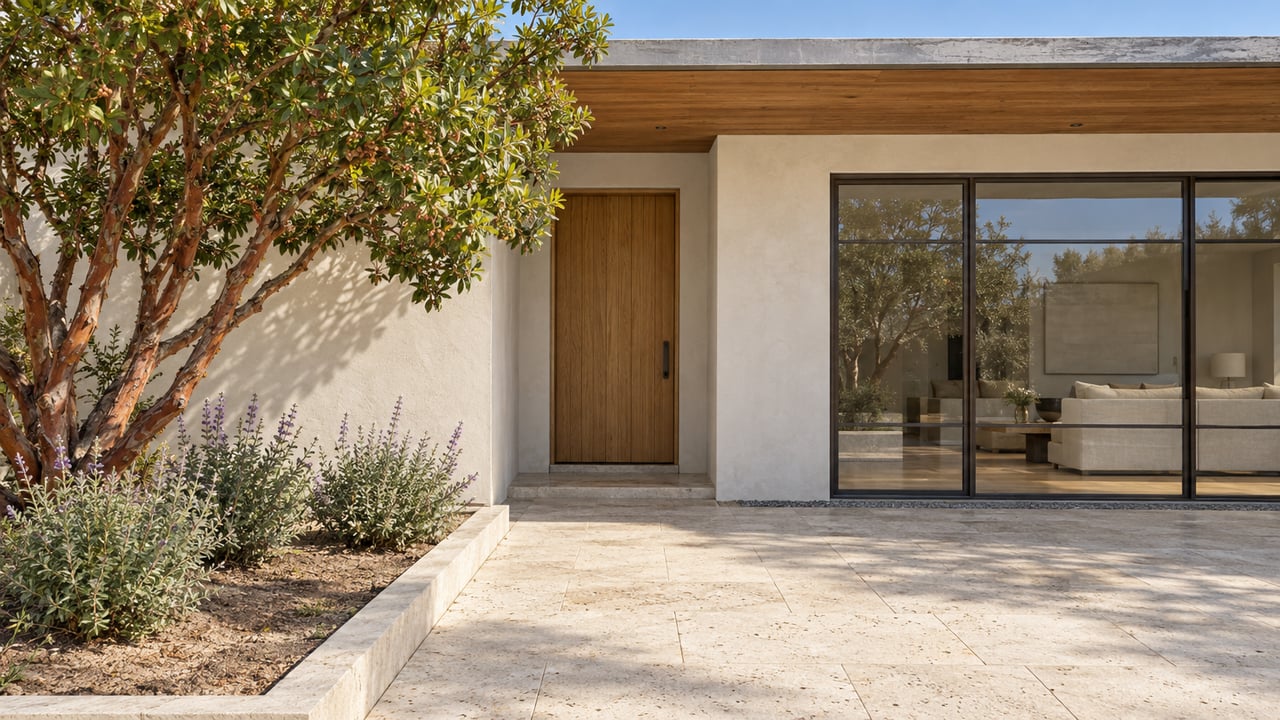
What does a buyer actually get when a Del Mar house comes with years of vacation-rental bookings? Under the rules the California Coastal Commission certified in February 2026, the buyer gets the house and none of the right to keep renting it. The Coastal Commission staff report on Del Mar's program says a short-term rental permit "may not be transferred, sold or assigned to any other person or entity." The rental history belongs to the seller. Once the sale closes, a new owner who wants to rent applies the same way any other owner in town would.
That would be a narrow technical point if the city's cap were still full. It isn't. Since May, the cap of 129 permits has stopped being the thing that limits short-term renting in Del Mar. The primary-residence rule now does that, and it sorts buyers very differently than the cap did.
A Decade of Rule-Making, Certified in February
Del Mar's path here was long. The city put a moratorium on new short-term rentals in residential zones on April 4, 2016. It adopted an ordinance in 2017 that the Coastal Commission approved with modifications in June 2018, but the city never accepted those terms, so that ordinance never took effect. The current ordinance was adopted September 23, 2024. The San Diego Union-Tribune reported that this made Del Mar the last city to approve a short-term rental ordinance.
The Coast News reported that the Coastal Commission approved Del Mar's amendment 7–2 in February 2026, and that Principal Planner Amanda Lee told commissioners the city had been working on the issue for more than ten years. A motion to cut the minimum stay from three nights to two failed. Commissioner Christopher Lopez made the case for two:
"Given the data that I'm seeing here, given the fact that we're not looking to create an average but really focus on the folks with the least access today, I will only be able to support this if we do the same as we did on the last, with an adjustment to two nights."
The three-night minimum held.
How the Cap Was Built, and Why It Looked Full
The 129-permit ceiling equals 5% of Del Mar's housing units, based on 2020 Census counts. A city consultant had found 125 short-term rentals operating in June 2023. The city then invited every rental operating before the ordinance's adoption date to register. That count reached 150, which was above the cap before a single new application arrived.
The citywide number is divided among neighborhoods to roughly match where rentals had historically operated:
- North Beach: 77 permits
- South Bluff: 32 permits
- The Hills: 19 permits
- North Bluff and commercial zones: no separate limit, but these rentals still count toward the citywide 129
With all 150 existing rentals counted, two of those three neighborhood caps were over their limits, and new applicants went onto a waitlist. Through the winter, the reasonable assumption was that a new permit in Del Mar would take years to come open.
May 1 Changed the Arithmetic
The City Council set a March 2 to May 1, 2026 window for permit applications. The 150 grandfathered operators had to apply in that window to keep their special status. According to the Del Mar Sandpiper's May 7 report, only 99 did.
The other 51 lost the protections that came with existing status. Those protections were eligibility regardless of the cap, an exemption from the one-rental-per-operator limit, and an exemption from the primary-residence requirement. Because 99 is below 129, the Sandpiper calculated that every existing applicant fits within the cap, with room left for 30 new short-term rentals. A city analyst confirmed that 10 owners were on the new-rental waitlist at the time.
Those numbers are a May 2026 snapshot. A June 2 budget update discussed revenue from permitted short-term rentals and new permit fees, but none of the City Council agendas from May 19 through the October 6 meeting included a newer count of issued permits or the current waitlist length. The neighborhood breakdown of the 99 applicants has not been made public either. A buyer focused on North Beach or South Bluff can't yet tell from public records whether that neighborhood's cap still has room.
Open Slots Under the Cap, With a Residency Requirement
Room under the cap does not make a permit available to every buyer. Each of those 30 openings goes to a new short-term rental, and new rentals come with conditions the grandfathered ones never had to meet. The table below compares the two tiers as the Coastal Commission report and the Sandpiper describe them.
| Requirement | Existing rental that applied by May 1 | New rental, including any home after a sale |
|---|---|---|
| Counted against the 129 cap | Allowed to operate even above the cap | Needs open capacity, both citywide and in its neighborhood |
| Owner's primary residence, more than six months a year | Exempt | Required |
| One rental per lot with one or two dwellings | Exempt from the per-operator limit | Applies |
| Parking | Existing arrangements accommodated | All garage, driveway and on-site spaces made available to guests |
| Transfer at sale | Ends; continues only for current owners or by inheritance | No transfer |
The right-hand column is what changes the market. Since May, a full-time Del Mar resident faces a shorter line for a permit than at any point since 2016. An owner buying a second home faces a requirement that capacity can't satisfy, because the program defines eligibility by where the owner lives, not by how many permits remain.
The program also gives a primary resident more room than the residency rule might suggest. The ordinance sets no limit on the time of year or the number of times a qualifying home can be rented, and it does not require the owner to be present while guests are there. Whole-home rental is permitted for both existing and new rentals. An owner who lives in Del Mar more than half the year and travels for the rest fits the program well.
What a Listing's Rental History Can and Can't Tell a Buyer
When a home is marketed with past booking revenue, that revenue belonged to the seller's permit, or to the seller's grandfathered status if the seller was one of the 99. The U-T summarized the city's position this way: existing rentals may continue "under their current ownership, and if they are transferred through inheritance." The Coastal Commission report adds one more continuity case. When an original permit holder remains on the new title, no new permit is needed, but the city has to be notified within 30 days.
Several other provisions affect specific kinds of property:
- Condominiums. No more than 10% of the primary units in a condo complex may be short-term rentals. Five complexes in residential zones were already above that share and were allowed to continue with valid permits. A new rental in one of those buildings has no room until the count falls.
- HOA documents. The city does not enforce HOA rules. Where an HOA exists, the permit application needs the HOA's written acknowledgment that no CC&Rs, deed restrictions or other governing documents limit short-term rental use differently than the ordinance does.
- ADUs. Short-term rentals are prohibited in ADUs in residential zones. In commercial zones, an ADU can operate as one if it is a primary residence, as in a mixed-use building.
- Commercial zones. The city's analysis found room for about 26 new short-term rentals in its commercial zones once there is space under the cap. The Beach Commercial Zone is excluded.
Operating rules apply to every permit. Occupancy is capped at two guests per bedroom plus two. Each rental needs a local contact reachable 24 hours a day, exterior signage listing that contact along with guest and vehicle limits, and a Good Neighbor Policy that bars weddings, commercial functions, and bachelor or bachelorette parties. Permits last two years. The city set the initial fee at $815 and each two-year renewal at $598. Under Measure M, which voters approved in November 2024, guests pay the city's 13% transient occupancy tax, and booking platforms are allowed to collect and remit it. Last October the council approved a three-year, $60,000 contract with Deckard Technologies to monitor short-term rentals across the city.
The hotels Del Mar visitors already know, including the Best Western, Del Mar Beach Hotel, L'Auberge Vacation Villas and Wavecrest Resort Timeshares, collect the occupancy tax but don't need a short-term rental permit. The Wavecrest Resort and L'Auberge Villas add 43 short-term options under their existing entitlements, and those were left out of the city's original rental count.
FAQ
Can the 129-permit cap be raised? Only through City Council approval followed by Coastal Commission review and certification.
What counts as a short-term rental in Del Mar? The ordinance covers visitor lodging of 30 days or less.
How are waitlisted applications handled? New applications are processed in the order received as capacity opens under both the citywide cap and the relevant neighborhood cap.
Is the 30-slot figure current? It reflects the May 7, 2026 report. The city has not published an updated count since then.
If you're weighing a Del Mar property for its rental potential, ownership structure, residency and permit status affect what you're buying as much as the house itself does. Laura Barry Luxury Estates reviews those details with clients before an offer is written. Put Our Success to Work for You.
This article is general information, not legal, tax or financial advice. Consult a qualified professional about your situation.